
Go North, Young One!
The neighboring Napa and Sonoma Valley AVAs are two of California’s northern most (and most famous) wine regions. While Napa is inland, Sonoma hugs the Pacific coast.
Napa Valley lies between the Vaca mountain range to the east and the Mayacamas to the west. With vineyards first planted in the 1850s, it became California’s first recognized AVA in 1981. (That was five years after making news by seeing its wines beat French wines in blind taste tests in the 1976 Judgement of Paris.) It’s a relatively small but impressively diverse region both in elevation and soil types. (It boasts 16 subregions.) Years prior, before the evil beast of Prohibition, its most popular red grape was Zinfandel. Now, Napa is indelibly know for its Cabernet Sauvignon. (Of course, for whites, it’s known for its Chardonnay.)
Sonoma Valley is one of 13 AVAs in Sonoma County. It’s the county’s oldest wine growing region and has the greatest diversity in terrain and, thus, in types of grapes grown. It preceded Napa Valley by starting its commercial production of wine in 1850, as the Gold Rush drew people from the south to the north. It followed close on Napa’s heels in terms of AVA status, also gaining it in 1981. Sitting in the southeast corner of Sonoma County, bordered by the Mayacamas Mountains to the east and the Sonoma Mountains to the west, the Sonoma Valley AVA shadows the Sonoma Creek Watershed, beginning at the Mayacamas and flowing into San Pablo Bay. Its oldest vineyards are Zinfandel, but, again, Cabernet Sauvignon is now the dominant red grape. It’s also known for Merlot and Chardonnay.
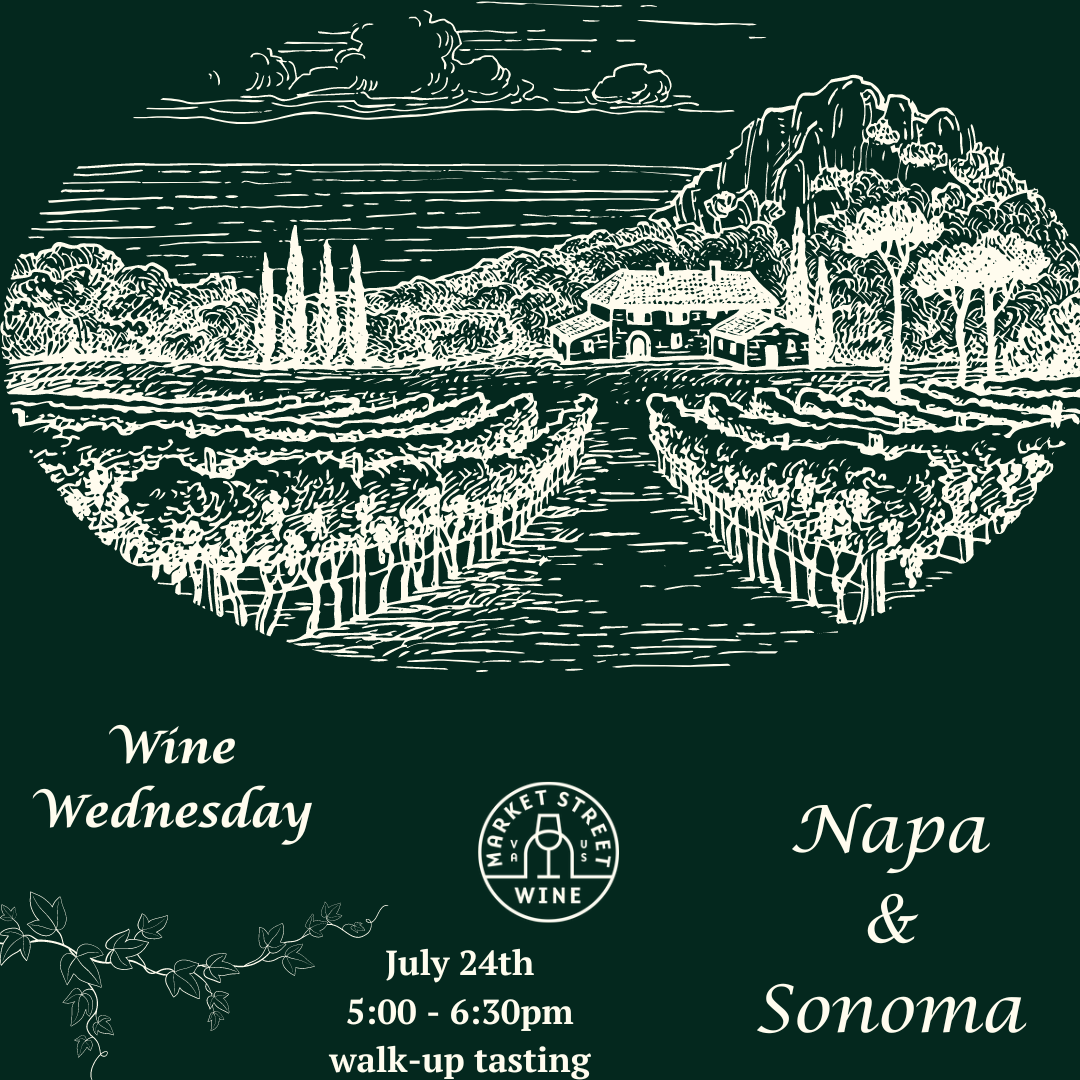
This Wine Wednesday, we taste wines from these two AVAs — arguably America’s most historically important wine regions. Please join us for another free, walk-up tasting.