
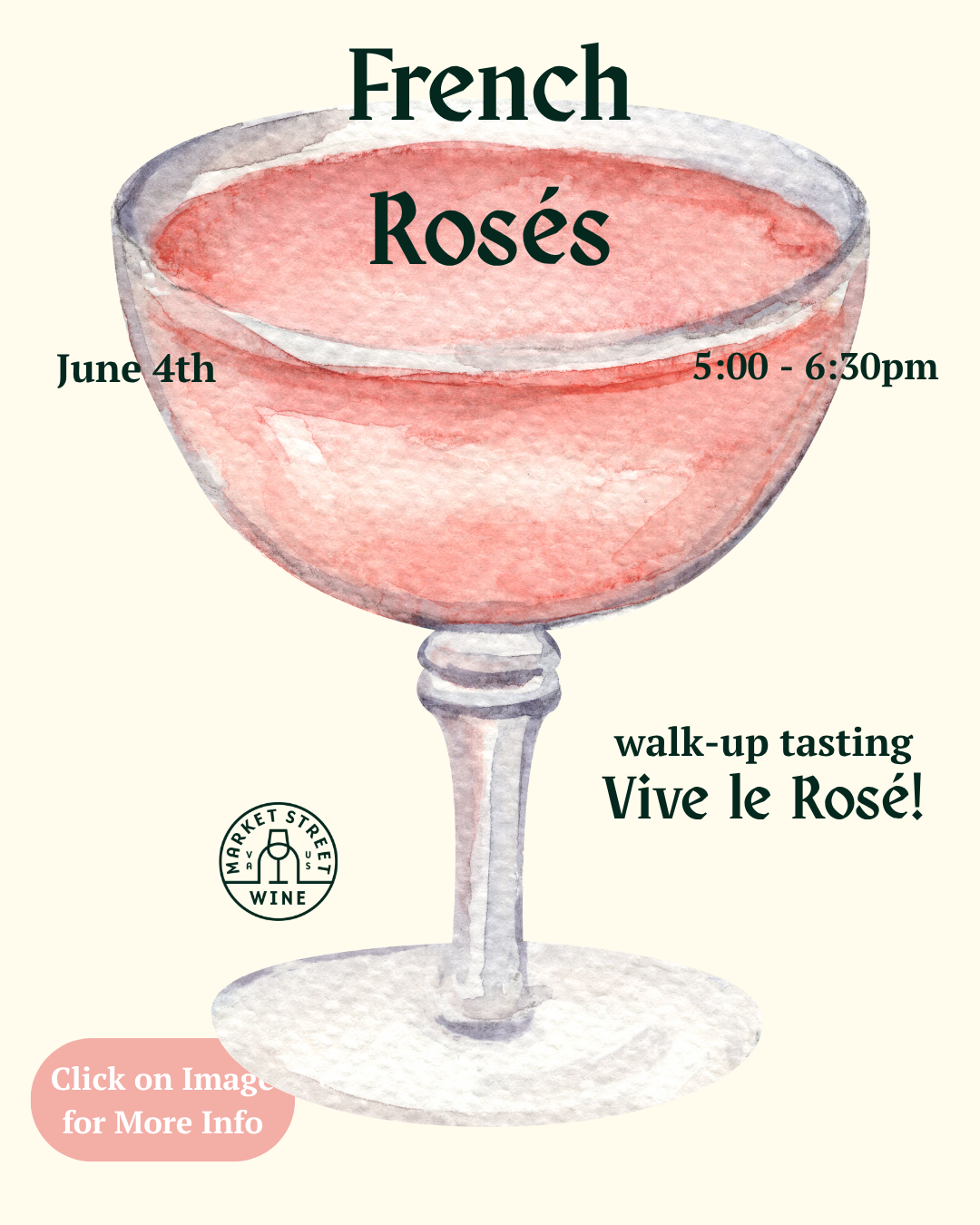
Le Rosé
When you think about Greeks or Phoenicians drinking the earliest European wines, what do you picture — someone dipping a cup into a barrel of red? Well, first off, it probably wasn’t a barrel, and secondly … it wasn’t red.
The earliest of those wines were field blends made from red and white grapes. This fact means that the history of Western wine pretty much starts with rosés! Eventually the Greeks and Romans experimented with separating grapes by color, but early red winemaking was bereft of techniques to counter red grapes’ tannins. According to records, people preferred the lighter, less harsh wines, so rosés continued to rule.
Therefore, when the Phoenicians brought Greek grapes and Greek winemaking to what is now Marseilles, on the southeast coast of Provence, what they did was show the Provençals how to make wine blending red and white grapes. That’s right! The first major development in French wine history … was rosé! Even today, Provence is the heart of French rosé, (They even have the Centre de Recherche et d’Expérimentation sur le Vin Rosé.), and the Provence style of rosé is followed all over the world.
Over the centuries, rosés have had an interesting journey in popularity. In the French Middle Ages, they were considered wine for the rich. Later on, they became a classless, every day wine.
Rosés are pink wines, and there are four ways that people make them (three of them being variations on the same theme):
Maceration: Most grapes have pale flesh, so the color in wine comes from their skins. Crush red grapes and let the juice sit with the skins, and the color (and tannins) bleed into the juice turning it red (and tannic). This process gives us what is currently the most popular way to make rosés. Take red grapes and give them limited time on the skins so that instead of the wine turning the red, it turns pink.
Saignée: In the Saignée (“Bleeding”) Method, you start with making a red wine, but you bleed off some of the juice from your vat — juice that hasn’t been fully macerated — and use that juice to make a rosé while you also continue making your red — two wines from one batch of grapes!
Direct Press: Here, you take your red grapes, press them, and then immediately spirit the juice away. In this method, the very small skin contact gives you light, delicate rosés. People associate such elegant rosés with the Provençal style of rosé.
Blending: You mix red and white grapes or you blend red and white wines, and you get a rosé. It’s the oldest way of making rosés (and, now we know, one of the oldest ways of making wine, period).
This Wine Wednesday, Please join guest pourer Geoff Bell from distributor the Robbins Cellars. It’s another free, walk-up tasting that you can attend any time between 5:00 and 6:30 PM.