
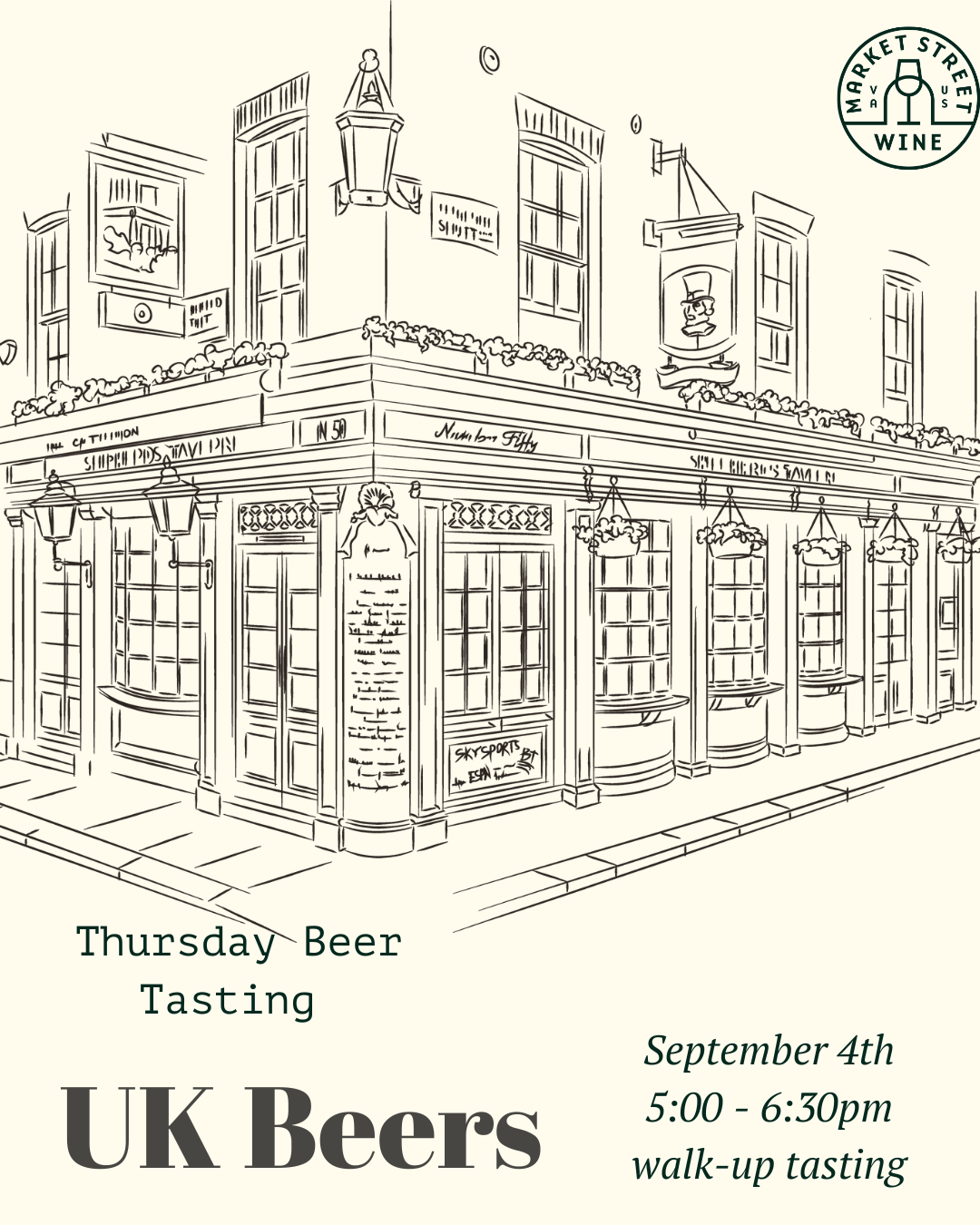
British Beers
Unsurprisingly, Britain has a long, long history of making ale. What is surprising is that it doesn’t have as long a history with beer.
“Wait … what?“ we hear you say. “Isn’t ale a type of beer?”
Turns out that now it is, but it wasn’t always.
Brits have been fermenting barley with yeast and water since the Middle Ages, with the earliest records of monks doing so going back to the 8th century — barley, yeast, and water … but no hops! Don’t get us wrong, the hop plant is one of Britain’s native plants. So hops have grown wild there since forever, but no one was brewing with them. For centuries, British ales were a staple of the culture, and they were either sweet or spiced with various herbs.
It wasn’t until the 15th century that Flemish merchants introduced the idea of “beer” to England — fermented barley bittered with hops. Even though English brewers started importing Flemish hops, the English remained loyal to their familiar national drink. It wasn’t until the 17th century that beer drinking outpaced “ale” drinking. (It certainly helped that a Britain that was now thoroughly invested in maritime trade couldn’t ignore the hop’s benefit as a preservative.)
The next century saw the Industrial Revolution revolutionizing beer production methods. The porter came about in the early 18th century, the barleywine appeared in the middle, but by the end of the century paler beers were becoming the rage, and at the very end of the century, we get the first “india Ale.” Still we get stouts at the beginning of the 19th century followed by the Pale Ale and the Bitter at the end.
Of course, today ales are a subset of beers, and we wouldn’t have our British ales any other way. This Thursday, coming off of last month’s VA beer journey, we break off and taste some British beers. Please join us anytime between 5:00 and 6:30 PM.