
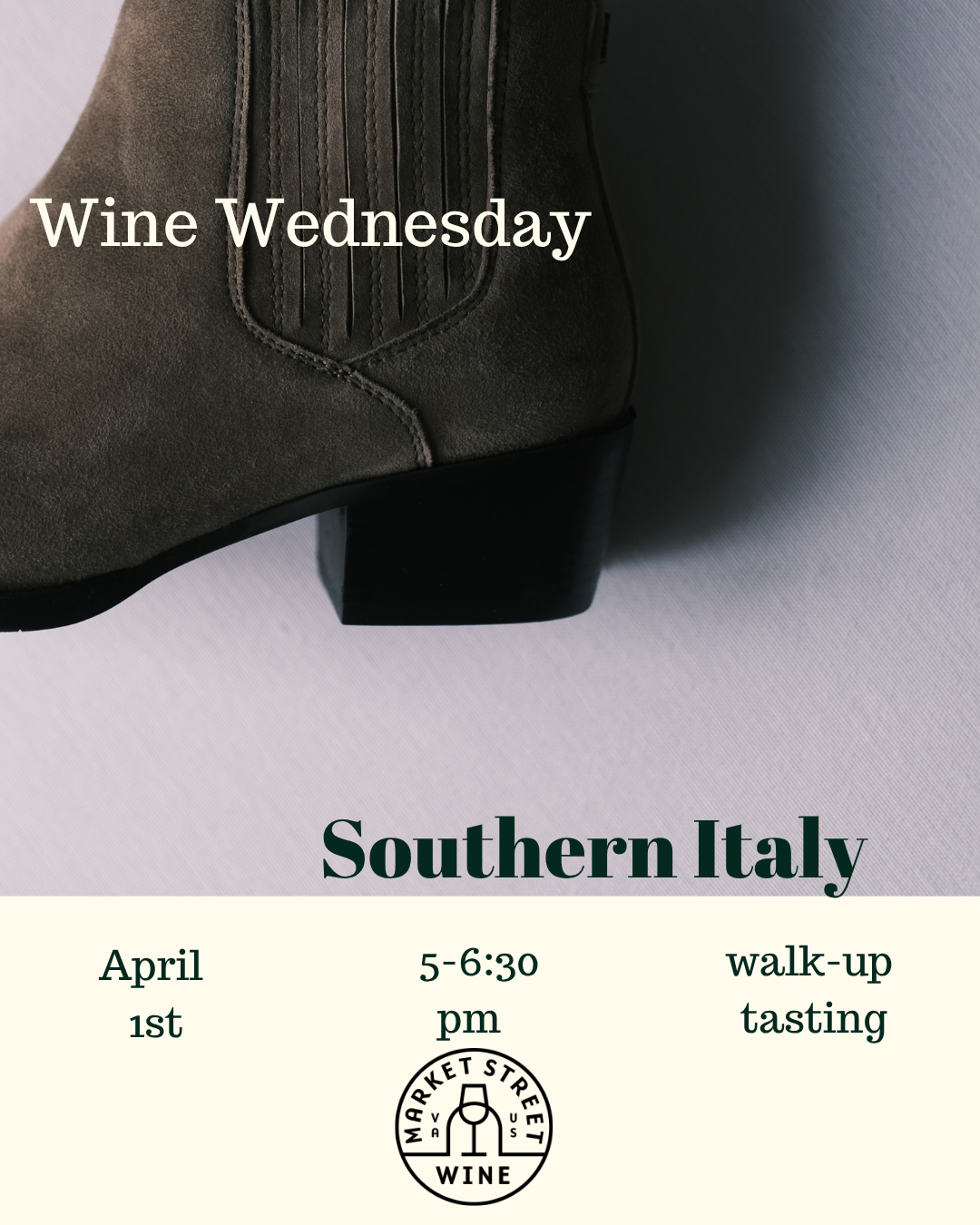
Tre dal Sud
Italy’s collection of appellations up and down the Apennine Peninsula is an embarrassment of riches. This Wine Wednesday, we’re going to focus on three of its southern appellations: Puglia and the islands of Ischia and Sicily.
Puglia (or Apulia)
Puglia is a thin region in the peninsula’s southeast corner — the heel and Achilles tendon of the boot, as it were. The northern part of Puglia is hillier than the rest, much more like central Italy to which it is also close in culture. In comparison, the southern part of Puglia is almost totally flat. Where once the entire region prospered making workaday wines in high volume, that strategy no longer held them in good stead when enough late 20th century wine consumers grew to prefer high quality over high quantity. In response, Puglians went so far as to consult with new world winemakers. Now, today, it is much easier to find carefully crafted wines Puglian wines that express their terroir and celebrate their favored grapes: Sangiovese, Primitivo, Negroamaro, and Trebbiano.
Ischia
Ischia is the largest of the Phlegraean Islands, a volcanic archipelago off the coast of Naples. Grape growing on the island stretches back to Roman times. Today, the best grapes grow on vineyards planted on the slopes of Mount Epomeo. The Ischia DOC (which takes up the whole island) is officially part of southwest Italy’s Campania region. Though it does make reds from Guarnaccia (yet another name for Grenache) and Piedirosso, the region is mostly known for its whites, made predominantly from native grapes Biancolella and Forastera.
Sicily
Sicily is the the Mediterranean Sea’s biggest island. That fact and its central position in the Med have contributed to Sicily having been a cultural crossroads throughout history. However, we’re here to talk about wine (although the former definitely contributed to the latter). Sicily has been making wine since 4000 BC. Though it has a variety of microclimates, in general the island is warm and dry with low rainfall and cooling coastal breezes. Most importantly, its aridness facilitates organic faming. Plus, it’s part of a volcanic archipelago that sees it hosting Mount Etna — one of Europe’s most active volcanoes — which means mineral rich, well-draining volcanic soils with all their benefits and challenges.
Please join us this Wine Wednesday as guest pourers Nathan Conway and John Grimsley from importer/distributor Le Storie treat us to some of their southern Italian wines. Stop by anytime between 5:00 and 6:30 for this free, walk-up tasting. (Can you think of a nicer way to support a local, small business, ‘cause we can’t.) :)